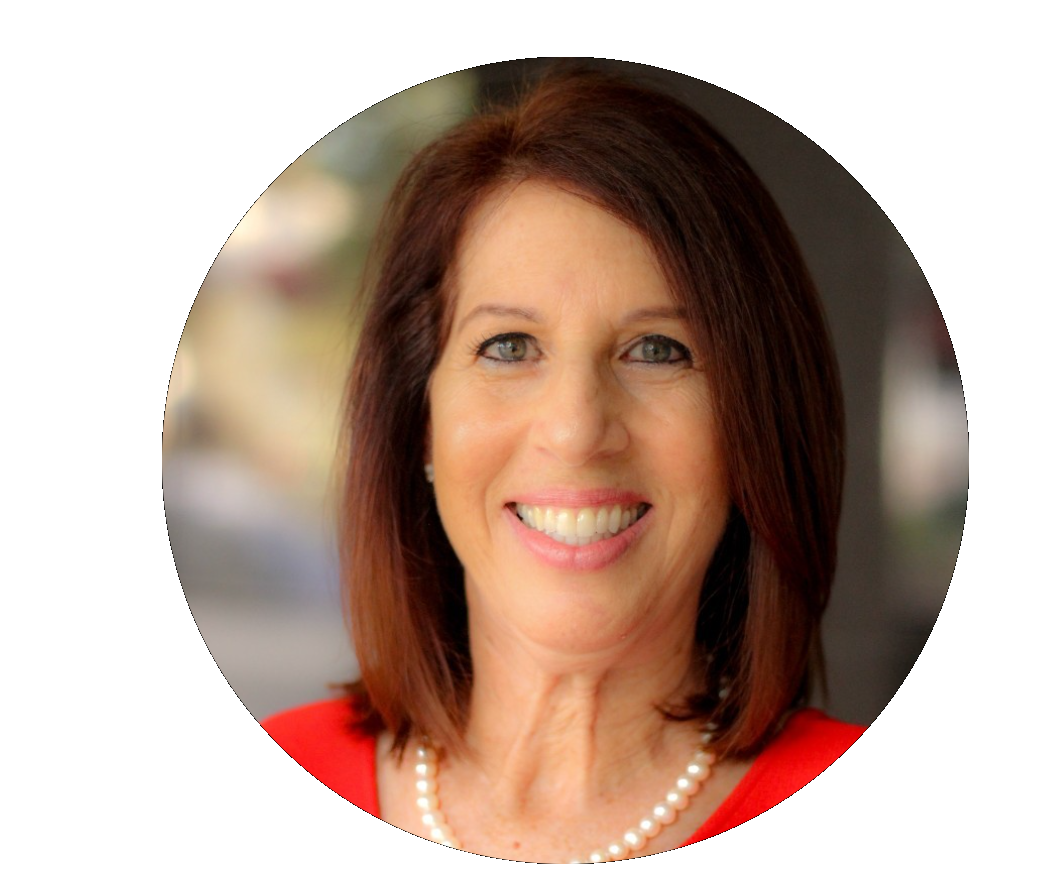
Good afternoon. I’m Dana Serrano. I’m
the owner and founder of Gate Mechanics
Therapy Services. Today we are thrilled
to have Sherry Geller. She is the owner
and founder of Senior Options Care
Management Company of South Florida and
she is here with us today as one of our
fantastic community partners. Sherry,
welcome. Thank you so much for being
here today.
Thank you for having me. I’m so excited
to be here. Well, we are thrilled to
have you as I mentioned and you have
been a community partner of ours for
quite a long time and I would love to
really explain to our families,
caregivers, our community at large how a
care manager would really assist the
ultimate goal that we have for our
patients, which is reinventing care in
the home and and aging in place, which
is really something that has caught fire
in our community. I think that there’s
always a place for, you know, for senior
living, of course, but for those
patients that are hoping to age in
place, I’d love to see exactly what you
do as a caregiver. If you can, as a care
manager, excuse me, what what that would
look like for those who are not familiar
with care management services.
Sure. It’s so funny because people say
to me all the time, what do you do? I
don’t understand it. So, very simply,
first of all, I love the fact we’re
talking about aging in place. We never
walked into a home where they said,
“Yippee, I want to leave here.” Right?
Or, “Yipp, you’re here.” So, we are here
to help the families help our clients
age successfully, no matter where they
are, right? We have a skill set.
Somebody once called me and said, “Oh,
you’re like the daughter.” No, you’re
the daughter. We want you to be the
family member. We’re the professional.
So, I have a team of social workers and
nurses. It’s a collaborative effort. But
what do we do? We assess our client.
We’re looking at everything. The
cognition, the physical functioning, the
safety, medications, socialization,
everything that makes up this one
person. How do we make a great day for
them? Can we and what does it look like?
So, we’re first identifying the issues
and the concerns that families might not
know even if they live close by. Again,
it’s the skill set, right? If I need
legal documents, I go to an attorney. If
I have issues with my heart, I go to a
cardiologist. So, people come to us
because their loved ones aren’t aging
successfully. Something’s going on. It
could be hospitalizations. It could be a
new diagnosis of Alzheimer’s, dementia,
Parkinson’s, cancer. It there’s so many
pieces to it and they just don’t know
what to do and where to go. So, once we
identify those issues, we create a plan.
And I know I’m talking a lot right now
and giving you a lot of information, but
then we’re overseeing
implementing the plan. Again, all with
the agreement of the family and the
client. We’re not doing we’re not the
decision makers. So, we’re just
presenting you with what the issues are
based on our skill set, experience, and
knowledge as well as here are resources,
options, and solutions to the problem.
Then we implement again based on their
agreement oversee coordinate care. So I
know that’s a lot but and it is a lot
but the goal is for our clients to be
safe and to have the best quality of
life.
I love it. Absolutely. So I I think that
really does help with giving our our
audience a broad stroke of what you do.
I will field a question and I know you
and I know the answer to this but I
think it would be so helpful to our
families and caregivers to understand
what is the difference between a
caregiver and what a care manager does.
We know that they’re two different roles
but if you can speak to that that would
be so helpful.
Sure. Okay. Very simple. The caregiver
is the person who’s taking physical care
of the of your loved one. They’re
helping the with the bathing. They’re
transferring. They’re helping them get
dressed. they’re making a meal for them.
We’re not in the home to do that. We’re
managing the care. We’re making sure
that the caregiver is doing what we we
the family wants them to do.
Okay? We’re working with them. We’re not
their employer, right?
We are managing um
really the day, what the day looks like
and working with the caregiver as a
partner, but we might be there once a
week, every other week. They’re there
every day. So, we are on the phone with
them checking in. We might have logs if
we need blood pressure check. We might
create a log that we need the caregiver
to fill out. So, they’re really the
hands-on care. We’re managing the care.
We’re like the quarterback or the
general contractor.
I love that. That really makes a big
difference. Do you tend to bring in
would you be able to bring in people as
caregivers so that they all fall under
your umbrella or do you provide
resources for those for those needs?
So we are independent. We do care
management. We’re independent of all our
resources. What we want from our
resources at is that the family calls up
and says wow that caregiver was amazing.
So we might work with 20 25 companies
that I’m doing this 20 years. So clearly
we’ve built up a nice rolodex so to
speak but it’s really finding the right
caregiver for that family for that
client and again so we will make
recommendations but if somebody has
somebody in there somebody knows
somebody they want if it’s not broken
we’re not going to fix it.
Right. Right. Yeah. Absolutely. That’s
very well said and I love the fact that
at least my experience of working with
senior options has been that you
definitely make sure that the right fit
is in there. um even though you’re
independent from these other resources,
what I love about what you and your team
does is the fact that you two
collaborate and you even though they’re
different companies, I will be honest
that the the experience at least for our
clients has been that things are
seamless. There’s communication going on
between the therapy staff, between the
caregiver staff and and the care
managers. So, it works as one unit even
though you’re independent from one
another.
Right. Dana, I have to say I started me,
myself, and I. It wasn’t so easy, right?
Who was I talking to? But now with this
team, when we sit around the table and
even we have a text going, we have calls
in between. Like one of my care managers
said to me the other day, “You don’t
realize how much we talk to each other.”
I said, “I love it.” So we
our clients do better. They’re more
successful because of the collaboration
and the communication. That’s when
people fall through the cracks, right?
When people don’t,
good, bad, or indifferent, right? You
have to know what’s going on.
You said it. I think and that is really
not to get too deep into the weeds, but
for sure is one of the biggest holes
that I’m seeing in healthcare as a
whole. Even when things organically
still under one umbrella as as a
corporation, how much disjointedness we
are finding within uh companies within
the same ecosystem. So to create a
success of collaboration outside of that
environment is is magnificent and and
well done. So you guys have done a
terrific job and to be very transparent
that’s one of the reasons that we use
you as a community partner as well as we
all do seem to work very well together
and under one umbrella. So the other
thing that I find comes up with lots of
our patients and family members is
traditionally they would see care
management as something that was really
best utilized if the family or the loved
ones lived remotely. Can you provide an
example of how that might work for those
that are living locally? How a care
manager would help?
So, look, most of our clients typically
their ch the children do live out of
state. They’re not here locally.
However, we do have families that have
retained us for our services. Why? They
travel a lot.
They have businesses that they’re just
so busy they don’t have time to check in
on mom or go to that appointment with
dad. So
if you’re if you’re doing if your
parents are do a loved one is doing well
and you live locally, you might not need
us. You need us if you don’t know the
resources. Things are falling through
the cracks. There’s lots of
hospitalizations. Things are going on
that you know what? This is not my skill
set. I don’t even know where to go. You
might want to bring in a care manager to
help you.
Okay. No, that helps so much. And I can
actually speak to that. My I started
this company very similar to on my own
um as a physical therapist and the
reason that we started to develop other
tiers of it and cognitive care. My
mother was misdiagnosed at 65 and at the
time I had an infant. I had a 2-year-old
and I had to work full-time. It was
quite difficult to manage her care and
be a parent and a wife and all of the
things that I needed to be. And at the
time I I knew no different. Um, but the
fact that there is help out there to do
that, I I for one can attest to the fact
that any help at that point to manage
the care of a loved one, which is a
full-time job, is is absolutely
necessary for survival.
And it’s also interesting, Dana, because
people think like, oh, you’re looking
at, you know, the cognition or the
physical. We’re looking at we’re looking
at their sleep patterns. They’re looking
at we’re looking at hydration and
nutritional intake because everything
impacts that person. So, if we’re
looking at everything, but they’re not
sleeping at night, they’re not having a
good day, most likely.
Correct.
Right. So, it’s a lot, like you said,
it’s a lot going on.
Absolutely. And I I think one of the
things that our team and your team do
well is collaboratively
really capturing the things that are not
seen in clinic. So, one of the things I
always find so interesting is how masked
people can can easily become when they
go to the doctor’s office. They put on a
brave face. Somehow their makeup is on.
Their hair looks good. They’ve showered
at one point in the past couple of days.
They answer the questions appropriately.
They throw a few jokes in uh to the
physician. They their blood pressure is
okay that day. But you and I know a
different story when we go into the
home. The the truth is in the fridge.
The truth is in what’s going on in the
home. And it always tells a different
story. And although obviously in clinic
is is very important piece of of what we
do and and physicians follow-ups and
neurologists and primary care, there is
a place to really take a look and see
how the patient is functioning or not
functioning in the home.
Correct. 200%. I mean, we have clients
who present so well and we’re literally
we send an email or write up a whole fax
to the doctor before let me tell you
what’s going on and how she’s probably
going to present. Right.
Right. So it gives them a heads up. But
yeah, it’s really they’re good.
They really are
of asking.
Absolutely. And I also find that the a
lot of times the family is the one that
really they don’t really see it.
Sometimes you’re a little too close to
it. So it’s it’s eye opening when you
end up coming in with your team and
really drawing this information out for
them. So
I I remember Dana somebody a daughter
once said to me, “Sherry, I don’t want
you to think we didn’t try A and B.” I’m
like, I’m sure you did, but you’re the
daughter,
right? Absolutely.
So if if you make that connection and
which we do, we’re very seasoned. They
when we say to them, you know, Susan,
you should try this. You think so? Yes.
Okay, let’s try it. Doesn’t happen so
easy. I’m not saying every time first
shout out, right? It takes time to build
that relationship and trust, but it’s
coming from the professional, not the
daughter.
Absolutely. That’s that’s such huge
insight. I I can’t emphasize that
enough. So, I did want to to give you an
opportunity to speak to LiveWell
Options, which is your new division. I
would love to hear how that fits into
this model and and what’s it what it’s
about.
Sure. So, I don’t it’s so new I don’t
even have it on my uh background yet.
So, we created Livewell Options, which
is about mental health. And so, we
started getting calls. I recently, to be
honest with you, my last few hires were
um very strong mental health
backgrounds. So, and I didn’t hire them
for that, but it’s always good to have,
right? Anyway, we started getting calls
that, you know, younger adults with
schizophrenia,
bipolar,
clinical depression, and in the past, I
don’t know if I would have taken it, but
we are, like I said, because I have
these very well- educated, knowledgeable
staff members, employees, care managers
who also work with senior options, but
are able to step into these situations.
And it’s again, it’s care management.
We’re not doing the therapy. We’re not
prescribing medications for them. We’re
managing and it’s a support to the
family. I mean, we have some incredible
success stories now, which I won’t go
into now, but it they are really off the
chart. So, we are tickled pink. We’ll
see where it goes. But there’s a lot of
mental health out there as we see in the
news every day. And I was talking to my
sister the other day and she mentioned,
she goes, you know, this is happening
every day. These people are known. We
get it. But this is happening every day
to people of every walk of life. So, we
really have to pay attention and try to
help.
I love it. Yeah, absolutely. And and
really that does very much encompass
what you do as a care manager. You know,
just the fact that you are closing the
gap on all fronts and mental health, as
you know, I’m very interested to see
where live Well goes because I think
this is just the beginning for it.
there’s just not enough resources out
there and the identification of these
issues is is is being missed left and
right. So, I love that. I’m I I’m so
grateful that you’re you’re doing that
for our community.
We’re very excited about really to help
these families and you know, look, we
get the calls, what would we do without
you? We bless you every day, but now
we’re looking at a different population
and
with, you know, these issues that, like
you said, there’s just not enough
resources. There’s really not. There’s
really not. People don’t even know where
to go or where to begin. So, with that
said, if somebody is interested in
learning more about care management or
thinks this might be a first step, how
what would be the first step with
connecting with you and your team,
Sherry?
So, first of all, you could certainly
call us. We’re all I’m always available
to have a conversation. I’m on the phone
a lot. It’s okay. Families from all over
all over the world. We have, you know,
children who live in the Middle East. um
very interesting stories anyway um and
clearly in America. So certainly you
should check out our website
senioroptions.com
because it will show our team, our
culture,
all the different services um and yeah
reach out.
Fantastic. And I will include the link
to your website below in the description
here so that everybody can see that and
and share it. And if anybody has any
questions, definitely reach out to
Sherry, reach out to myself. Sherry,
thank you so much for all that you do. I
am so honored to be collaborating with
you and a community partner. Um, I love
to hear other people spearheading what’s
needed in the community and you embody
that. Thank you.
Thank you. I appreciate it. And I just
have to say, Dana, we love working with
your team. I mean, you really you’re
second to none in your field. And I mean
that not saying that because I’m on
here, but you really stand out. So, we
appreciate the collaboration as well.
Thank you, Sherry. Have a wonderful day.
Take care. You, too. Take care.